 DONNOK
Does a 3% pay rise mean 3% more purchasing power?
Work out how a pay rise and inflation combine, and compare income using a consistent period and pay basis.
Match the period and the pay basis
Compare the same month a year apart, or two full years. Keep monthly pay separate from annual pay and use either gross or net figures consistently. Check changes in working hours, bonuses and deductions separately.
Pay of 103 buys about 100.98 at earlier prices
Set earlier pay to 100 for a simple example. After a 3% rise, divide 103 by the price factor 1.02 to get 100.9804. That is about 0.98% more purchasing power. The table uses hypothetical changes over one year, not current statistics or a pay forecast.
| Price rise | Purchasing power change |
|---|---|
| 1% | About +1.98% |
| 2% | About +0.98% |
| 4% | About −0.96% |
Your experience can differ
CPI reflects an average spending basket. A different mix of rent, food and transport can produce a different experience. Real pay growth alone does not describe your ability to save or your whole financial situation.
Record the money you set aside in DONNOK
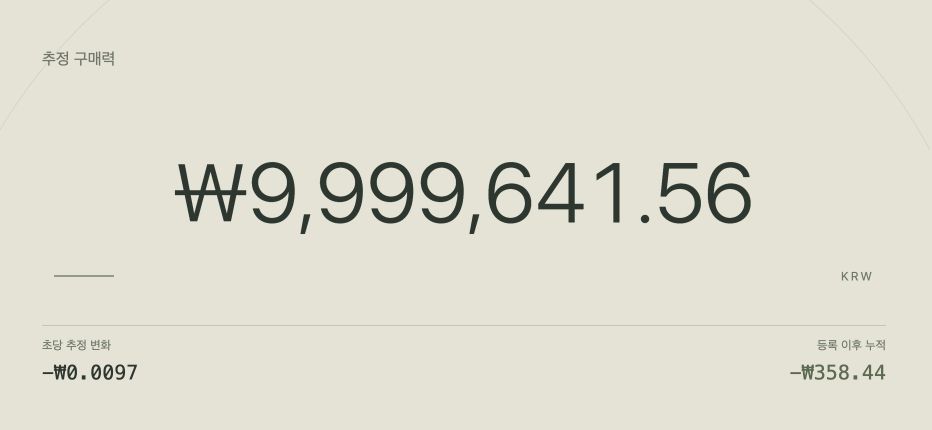
Manually enter an amount left from your pay and its date to observe estimated purchasing power afterward. DONNOK does not collect payroll or calculate pay rises. Its personal display uses Korean CPI regardless of currency, so it does not measure overseas pay against local inflation.