 DONNOK
Why are prices still high when inflation is falling?
Price levels and inflation rates measure different things. A 5%-then-2% example explains disinflation, deflation and purchasing power.
Does 5% followed by 2% return prices to where they were?
Suppose a hypothetical price level rises 5% from 100 to 105 in year one, then 2% in year two. It reaches 107.1. Inflation has slowed, yet prices are 7.1% above the starting point, not the 7% obtained by simply adding the rates. These are assumptions, not actual CPI observations or forecasts.
What happens to the same amount of money?
If you keep an unchanged amount of 100 for those two years, its purchasing power at starting prices is 100 ÷ 1.071 ≈ 93.37. Higher average prices reduce what it buys; this does not mean money was deducted from your account.
| Point in time | Price level |
|---|---|
| Start | 100 |
| After year 1 · +5% | 105 |
| After year 2 · +2% | 107.1 |
Check the comparison period in the news
Month-on-month and year-on-year rates compare different periods. Do not mix them to judge whether inflation is accelerating. An overall index also differs from an individual item: some goods can become cheaper while average prices rise.
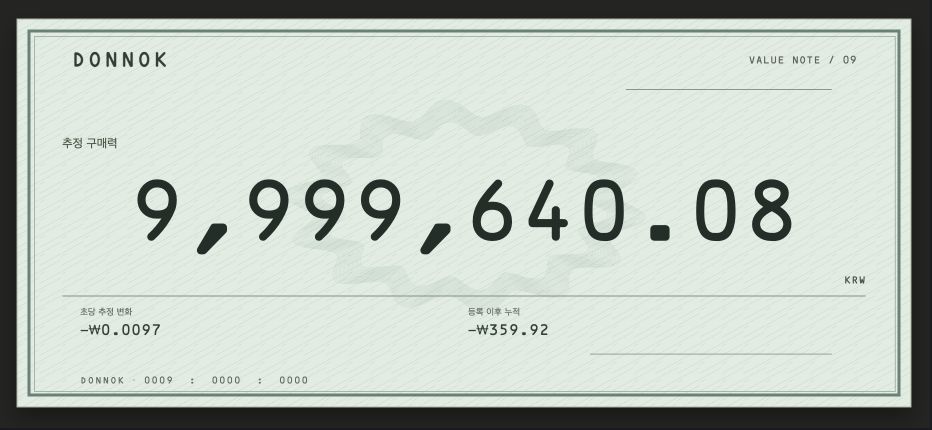
DONNOK follows changes from the date you record
DONNOK shows estimated purchasing power using the recorded amount, its date and Korean CPI. News of lower inflation does not by itself imply that the display should return to the original amount. Check the economic data period and update status in the app.