 DONNOK
DONNOK · Notes
Small notes. A new view of money.
From growing savings to interest and purchasing power: clear examples and a new way to observe your money.
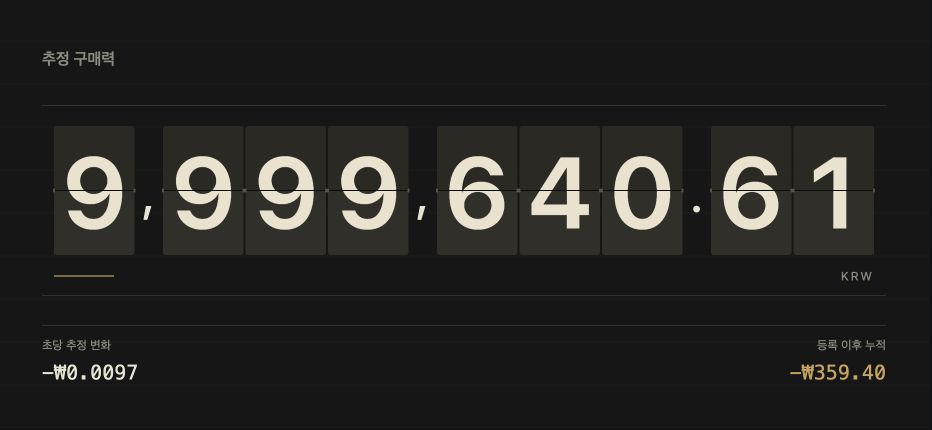
Tired of daily expense tracking? A lighter way to observe saved money
Try DONNOK with a sample amount, then record one fund. Use a retro money display or home screen widget to observe estimated purchasing power without a daily expense diary.
Read more ↗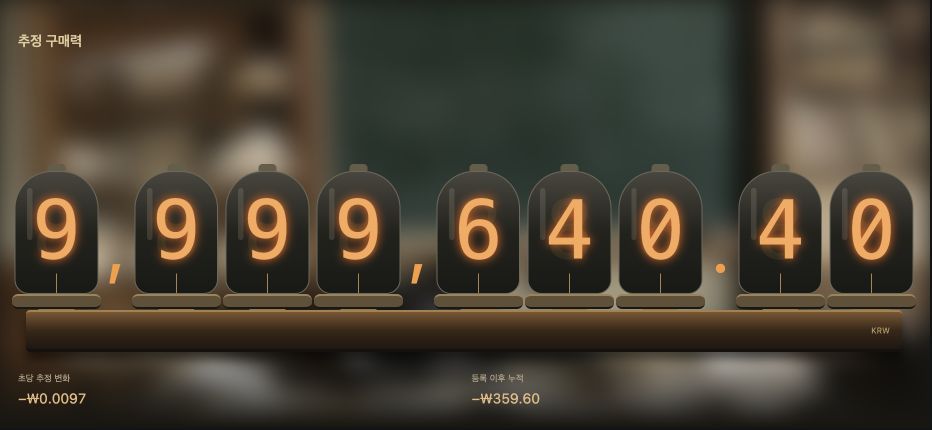
Customize a retro money display with FLIP, NIXIE and a clock
Turn DONNOK into a retro desk display. Compare real FLIP and NIXIE screens, then combine a custom title, 24-hour clock and lower information fields.
Read more ↗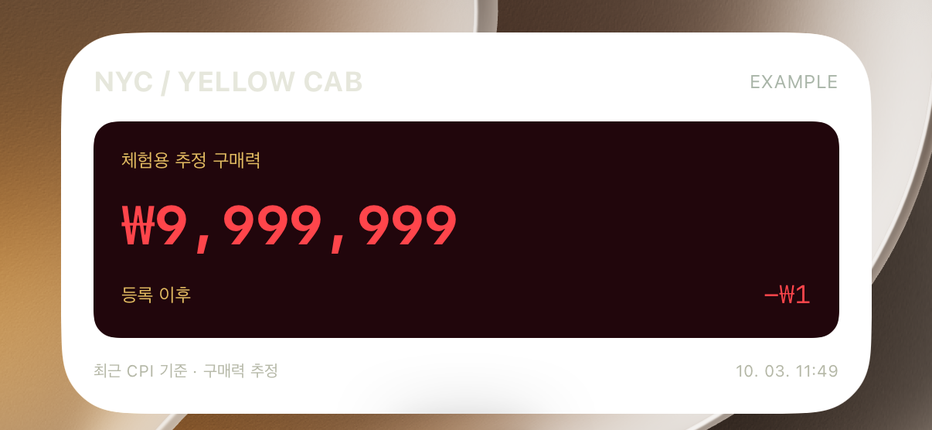
Customize a money widget on iPhone or Android without changing the app theme
Keep FLIP in the app and choose a different DONNOK widget theme. Explore decimals, cumulative change and calculation time, plus iPhone and Android display differences.
Read more ↗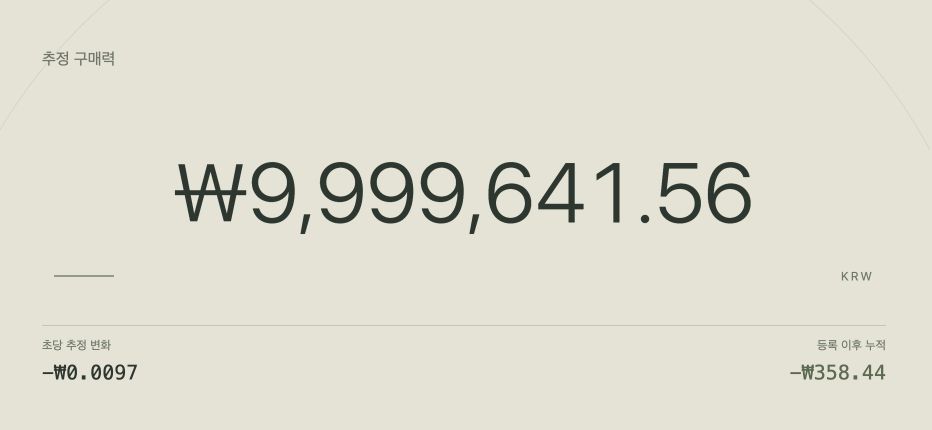
Does a 3% pay rise mean 3% more purchasing power?
Work out how a pay rise and inflation combine, and compare income using a consistent period and pay basis.
Read more ↗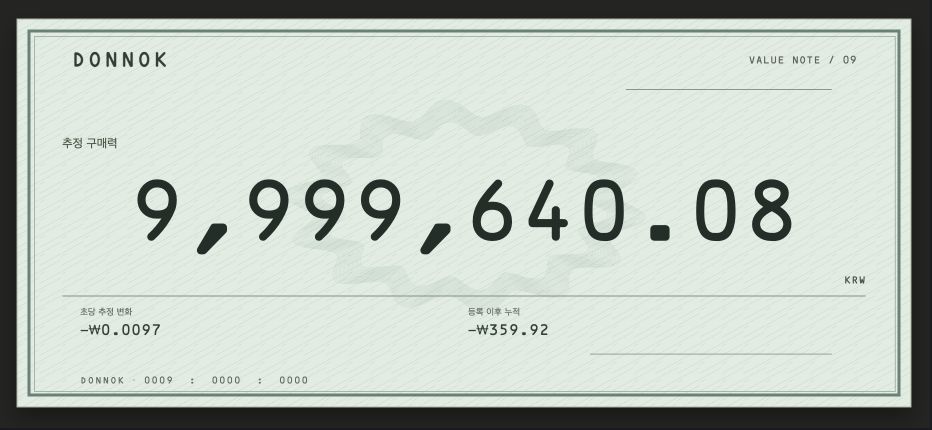
Why are prices still high when inflation is falling?
Price levels and inflation rates measure different things. A 5%-then-2% example explains disinflation, deflation and purchasing power.
Read more ↗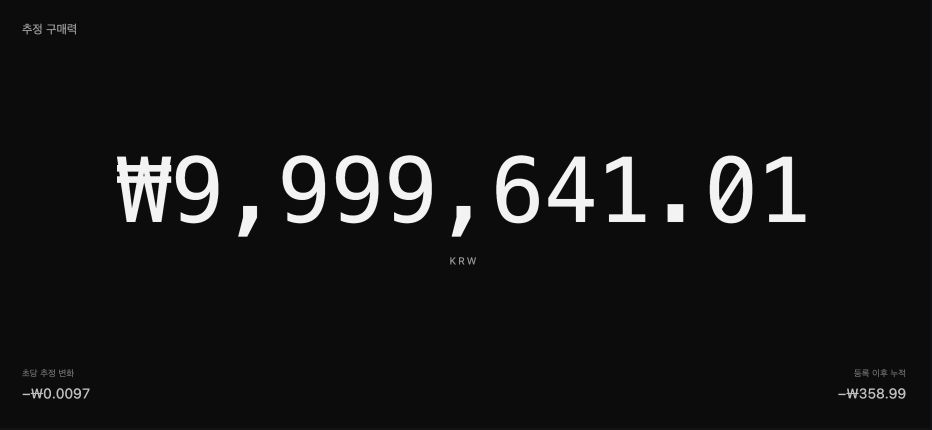
Does a new CPI base year change your purchasing power?
A CPI of 100 is a reference point. A worked example shows why rescaling an index changes its numbers but preserves purchasing power ratios.
Read more ↗How is DONNOK different from budgeting and account-linking apps?
Budgeting apps track spending and account aggregators show balances. DONNOK shows the estimated purchasing power of money you record. How the three compare and how to use them together.
Read more ↗DONNOK privacy: where your amounts are stored and what is sent
DONNOK keeps your amounts in your device’s secure storage, with no account or bank link. Screen hiding, capture protection, what location, analytics and ads process, and how to delete your data.
Read more ↗Getting lent money back a year late: how much purchasing power is lost?
Lend 10 million won in August 2025, get the same amount back in August 2026, and it buys about 9.70 million won’s worth at South Korean prices. One-, two- and three-year results, plus how to track it in DONNOK.
Read more ↗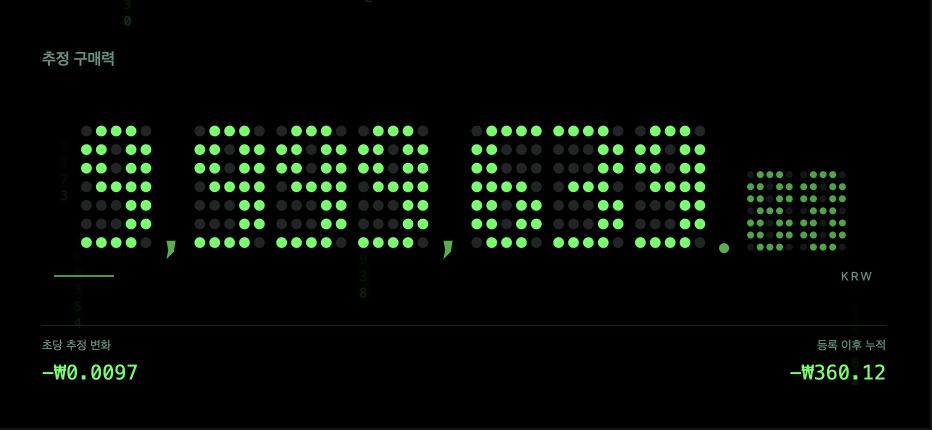
Why splitting savings into separate funds changes their purchasing power
The same 1 million won has different purchasing power depending on when you set it aside. How to add several funds in DONNOK, with worked examples using South Korean CPI for August 2026.
Read more ↗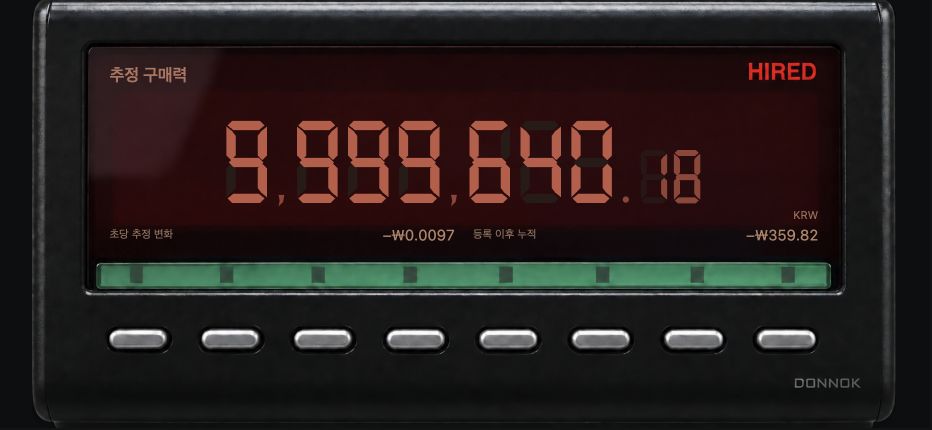
Can I use DONNOK in US dollars, yen or English? Currency, language and country settings
DONNOK supports KRW, USD and JPY and an English or Korean interface. Funds are kept separately per currency, and purchasing power always uses South Korea’s CPI, whichever currency you choose.
Read more ↗How to use DONNOK: track your money’s purchasing power without a bank link
Add funds, set a start date and watch their estimated purchasing power on a live display. How DONNOK calculates each category and where your data stays.
Read more ↗What will 100 million won be worth in 10 years? Future purchasing power calculator
At 3.161% inflation, 100 million won keeps 73.3% of its value after 10 years. How DONNOK’s calculator works, with results for 2%, 3% and 5%.
Read more ↗Watch compound growth tick every second: DONNOK’s My investment board
Enter a principal and annual return to see a compound growth estimate rise every second: setup, formula, a 10 million won at 5% example and its limits.
Read more ↗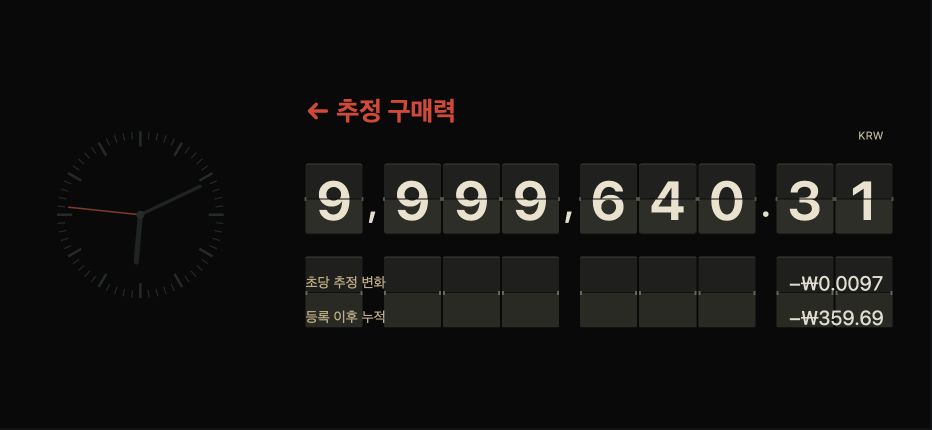
South Korea’s national debt and M2 boards: how much do they grow per second?
How DONNOK estimates per-second growth of Korea’s national debt (1,304.5 trillion won in 2025) and M2 money supply, and why these are not live numbers.
Read more ↗DONNOK landscape full screen: a flip or Nixie money display for your desk
Show a DONNOK board in landscape full screen on your desk: title, clock, digit size, keep-awake and screen protection settings, and themes for long viewing.
Read more ↗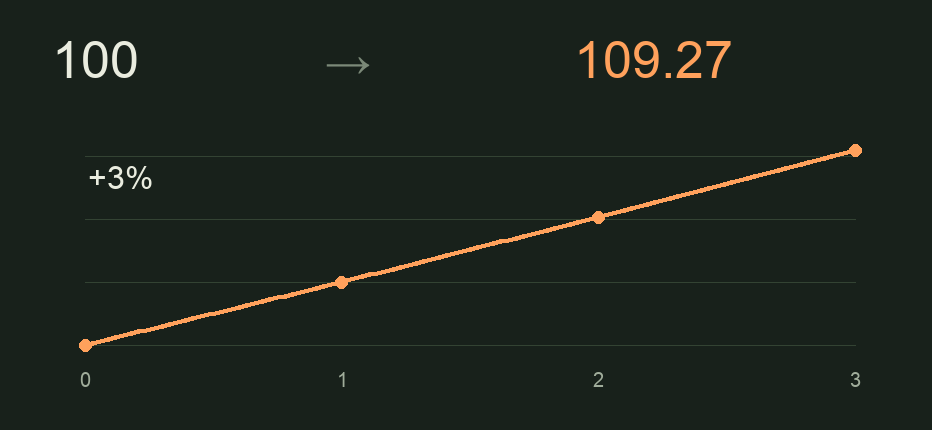
Monthly contributions and compound interest: how to calculate each
Start with 1,000 and add 100 a month for 12 months, and your principal is 2,200. Learn to calculate principal and 3% compound interest separately with worked examples.
Read more ↗3% interest and 2.5% inflation: how much does purchasing power grow?
Compare a 3% return with 2.5% inflation in a worked example, and see why balance growth and real growth differ.
Read more ↗Balance vs. purchasing power: what happens when prices rise?
Understand balance and purchasing power with a KRW 1 million example assuming 2% annual inflation, plus DONNOK’s Korean CPI and currency limits.
Read more ↗DONNOK’s 8 display themes compared: style, readability and orientation
Compare all eight DONNOK themes by style, number readability and landscape or portrait layout, using actual app captures. Themes never change your funds or calculations.
Read more ↗How to add DONNOK iPhone widgets—and why refresh can be delayed
How to add DONNOK widgets to the iPhone Home Screen and Lock Screen, choose what they show, understand delayed updates and troubleshoot without deleting your records.
Read more ↗How to add the DONNOK Android widget: sizes, display and refresh
Two ways to add the DONNOK widget to an Android Home screen, what it shows at each size, and why hourly refresh requests can appear late.
Read more ↗