 DONNOK
Monthly contributions and compound interest: how to calculate each
Start with 1,000 and add 100 a month for 12 months, and your principal is 2,200. Learn to calculate principal and 3% compound interest separately with worked examples.
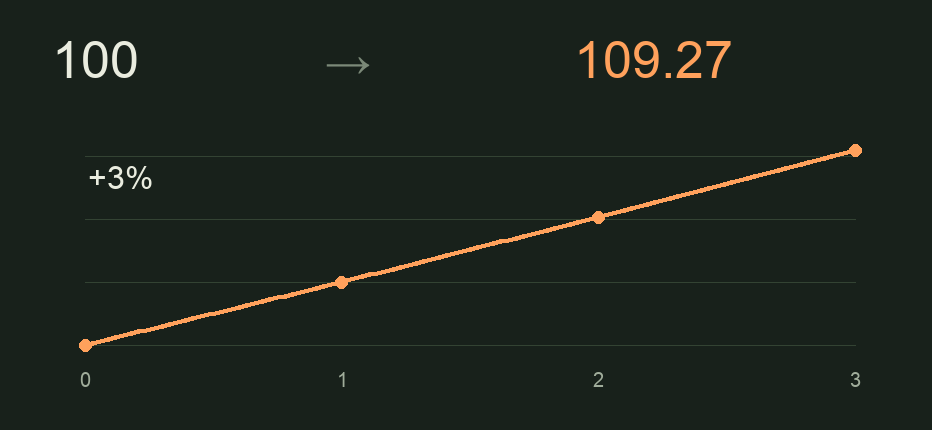
How much principal do monthly contributions build?
Start with 1,000 and add 100 each month for 12 months: your contributions total 2,200, before interest. After six additions the total is 1,600; after twelve it is 2,200. All amounts use the same chosen currency.
This example counts deposits only. Adding 1,200 is not a 120% investment return: new savings and earnings are different sources of growth.
How do you calculate 3% compound interest?
With no further deposits, 1,000 growing at an assumed 3% annually becomes 1,030 after one year, 1,060.90 after two and 1,092.73 after three. From the second year, previous interest also earns interest.
The formula is principal × (1 + annual return)^years. The 3% is an illustration, not a current rate or forecast. Taxes, fees and inflation are excluded.
What can DONNOK’s My investment display show?
Enter a principal and annual return in My investment and apply them. The app estimates annual compound growth from the moment you apply the settings. It does not automatically use your registered funds; applying the settings again restarts the calculation from then.
This is a scenario for a single starting amount. The monthly contribution example above is a separate calculation, not an automatic deposit or bank transaction tracking feature.
How should you separate principal, interest and purchasing power?
Use your bank records for actual savings and DONNOK’s display for growth under chosen assumptions. Distinguish money you contributed, earnings and what the total can buy.
Small movements on the display represent a calculation over time, not interest paid by your bank every second. Choose a theme and observe how your assumptions shape the numbers.